
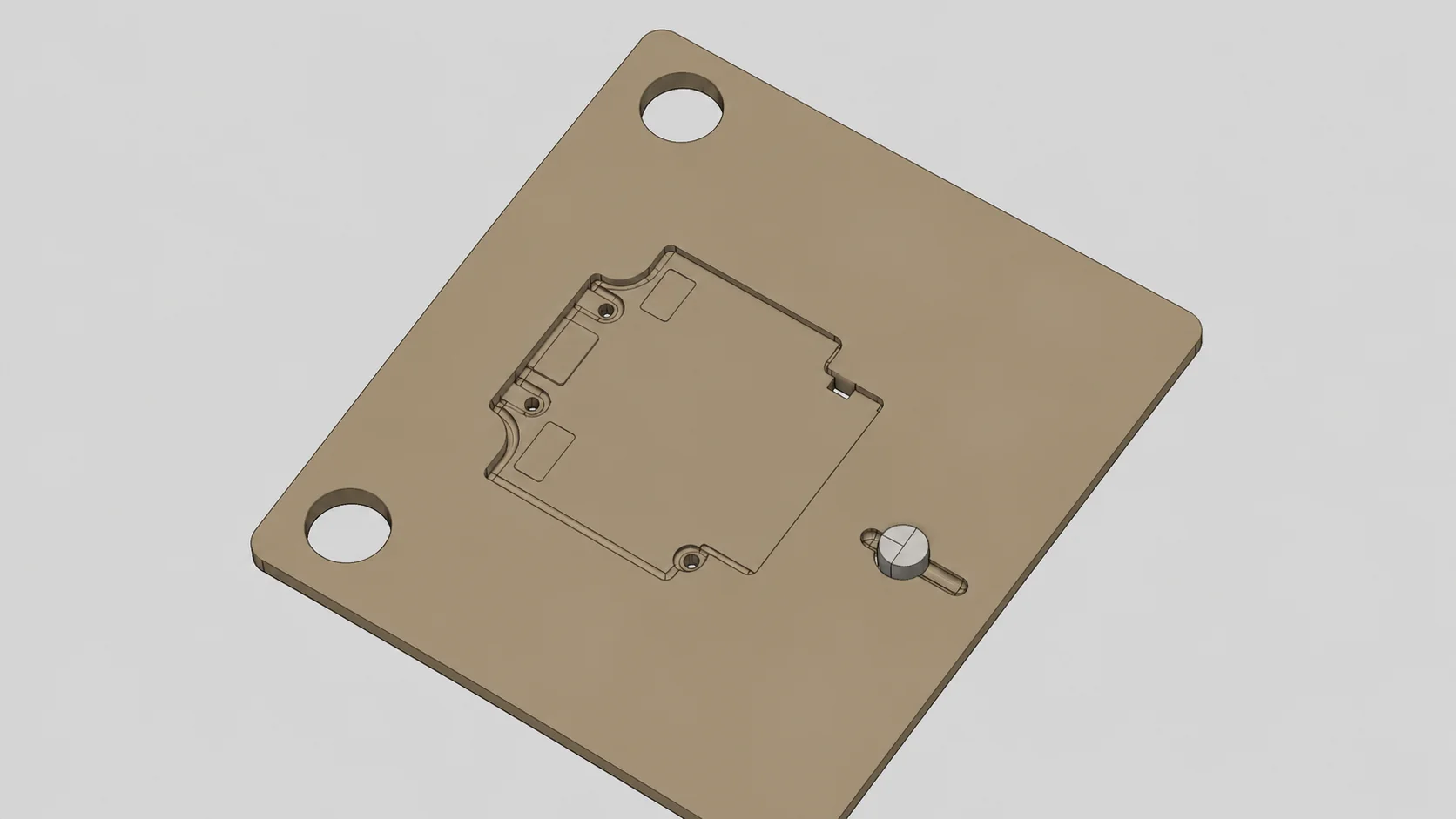
Once a part is moldable, the next decision is how many of it the tool makes per shot. Cavitation drives the tool price up front and the piece price for the life of the program, and the two move in opposite directions. Getting it wrong in either direction is expensive.
Single cavity
One part per shot. Lowest tool cost, simplest construction, easiest to sample and to modify, and the least risk if the design is still moving.
Piece price is highest, because every shot carries the full machine rate and cycle time for one part. Single cavity suits launch volumes, large parts where a multi-cavity tool would need a much bigger press, and any program where the design is not yet frozen. It is also the sensible choice when a design will likely change after market feedback, since modifying one cavity is far cheaper than modifying eight.
Multi-cavity
The same part, repeated. A four-cavity tool produces four identical parts per cycle, so the machine time per part falls sharply. Tool cost does not rise fourfold — the mold base, the ejection system, and much of the engineering are shared — so unit economics improve significantly at volume.
The constraints are physical and financial. More cavities need more clamping force and a larger shot volume, so a high-cavitation tool may require a bigger press than a low one. Balancing the runner so every cavity fills identically becomes harder as cavity count rises, and an unbalanced tool produces parts that differ measurably from cavity to cavity. Maintenance also gets more consequential: one damaged cavity affects the whole tool.
Family mold
Different parts of the same assembly in one tool — for example a housing and its matching lid. One tool, one setup, and matched production quantities of components that ship together.
The catch is filling. Parts of different size and geometry fill at different rates from a shared runner, so the tool is a compromise: the large part may be packed correctly while the small one is over-packed, or vice versa. Family tools work best when the parts are of similar size, similar wall thickness, and the same resin and colour. They work badly when one part is cosmetic and another is structural, or when the two parts are needed in different ratios.
Choosing
| Situation | Usual answer |
|---|---|
| Design not yet frozen | Single cavity |
| Launch or pilot volume | Single cavity |
| Large part, high clamp demand | Single or low cavitation |
| Steady repeat volume | Multi-cavity |
| Matched components, similar size and resin | Family mold |
| Components needed in different ratios | Separate tools |
The honest way to decide is to quote two options against a realistic annual volume and compare total cost over the first year and the second, rather than comparing tool prices alone. A cheaper tool that carries a higher piece price will often lose within the first year at steady volume, and a high-cavitation tool bought for a volume that never arrives is capital that never returns.
Send your part and target annual volume and we will quote the cavitation options side by side.